
Different Designs of PBGVT Toilets
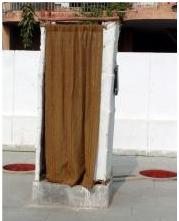
Model No. 1
Substructure : Mud platform plastered in cement mortar 1:4, cement plastered pan, cement trap and brick plastered foot rests. Pit lining – Tar drum, Pit cover – Compacted soil over thatch and logs.
Superstructure : Jute all round the latrine on bamboo frame 1800 mm high and curtain made of jute for a door
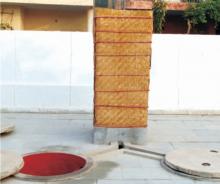
Model No. 2
Substructure : Mud platform plastered in cement mortar 1:4, cement plastered pan, cement trap and brick plastered foot rests. Pit lining – Brick work 75 mm in cement mortar 1:6, Pit cover – Compacted soil over thatch and logs.
Superstructure : Palm matting all round thelatrine on bamboo frame 1800 mm high and jute purdah on door opening, painting on matting.
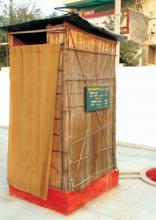
Model No. 3
Substructure : Dry brick ballast in foundation, brick work in mud mortar, flooring of 12 mm thick 1:4 cement plaster over 75 mm dry brick ballast, cement mosaic pan, cement trap and brick plastered foot rests. Pit lining – Brick work 75 mm in cement mortar 1:6, Pit cover – 50 mm thick R.C.C. 1:2:4.
Superstructure: Thatch wall with thatch roof on bamboo frame and jute purdah on door opening 1800 mm high.
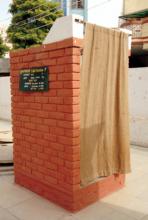
Model No. 4
Substructure : Dry brick ballast in foundation, brick work in cement mortar, flooring of 12 mm thick 1:4 cement plaster over 75 mm dry brick ballast, cement mosaic pan, cement trap and brick plastered foot rests. Pit lining – Brick work 115 mm in cement mortar 1:6, Pit cover – 75 mm thick R.C.C. 1:2:4.
Superstructure: 115 mm thick brick work in 1:6 cement mortar 1500 mm high and jute purdah on door opening 1800 mm high.
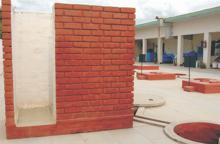
Model No. 5
Substructure : Dry brick ballast in foundation, brick work in cement mortar, flooring of 12 mm thick cement plaster over 75 mm dry brick ballast, mosaic pan, cement trap, brick plastered footrest, Pit lining – brick work 115 mm in cement mortar 1:6, Pit cover – 75 mm thick R.C.C. 1:2:4.
Superstructure: 115 mm thick brick work in 1:6 cement mortar 1500 mm high. It is G-Shape no door required.
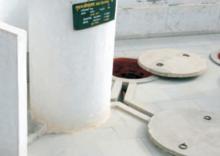
Model No. 6
Substructure : Dry brick ballast in foundation, brick work in cement mortar, flooring of 12 mm thick 1:4 cement plaster over 75 mm dry brick ballast, cement mosaic pan, cement trap and brick plastered foot rests. Pit lining – Brick work 115 mm in cement mortar 1:6, Pit cover – 75 mm thick R.C.C. 1:2:4.
Superstructure: 115 mm thick brick work in 1:6 cement mortar 1500 mm high and jute purdah on door opening 1800 mm high.
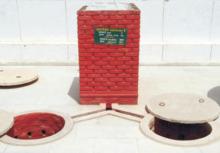
Model No. 7
Substructure : Dry brick ballast in foundation, brick work in 1:6 cement mortar, flooring of 1:4 cement plaster over 75 mm dry brick ballast, cement mosaic pan, cement trap and brick plastered foot rests. Pit lining – Brick work 115 mm in cement mortar 1:6, Pit cover – 50 mm thick R.C.C. 1:2:4.
Superstruture: 115 mm thick 1500 mm high brick wall in cement mortar 1:6 (G-Shape)
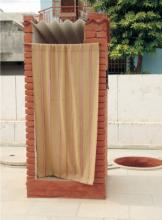
Model No. 8
Substructure : Cement concrete 1:6:12 in foundation, brick work in 1:6 cement mortar, flooring of 1:4 cement plaster over 75 mm dry brick ballast, cement mosaic pan, cement trap and brick plastered foot rests. Pit lining – Brick work 75 mm in cement mortar 1:6, Pit cover – 50 mm thick R.C.C. 1:2:4.
Superstructure: 115 mm thick brick wall in 1:6 cement mortar, A.C. sheet roofing, holes in brick work for ventilation and jute purdah 1800 mm high. Inside white wash and outside colour wash.
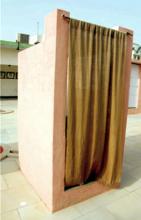
Model No. 9
Substructure : Cement concrete 1:6:12 in foundation, brick work in 1:6 cement mortar, flooring of 1:4 cement plaster over 75 mm dry brick ballast, fibre glass pan, HDPE trap and ceramic foot rests. Pit lining – Brick work 115 mm in cement mortar 1:6, Pit cover – 50 mm thick R.C.C. 1:2:4.
Superstructure: 115 mm thick brick wall in 1:6 cement mortar 1500 mm high, 600 mm high dado in cement mortar 1:4, both sides plastered in 1:6 cement mortar and jute purdah on door opening 1800 mm high.
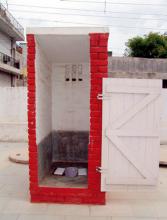
Model No. 10
Substructure : Cement concrete 1:4:8 in foundation, brick work in 1:6 cement mortar, C.C. 1:2:4 flooring over 75 mm C.C. 1:6:12, fibre glass pan, HDPE trap and ceramic foot rests. Pit lining – Brick work 115 mm in 1:6 cement mortar, Pit cover – 50 mm thick R.C.C. 1:2:4.
Superstructure: 115 mm thick brick work in 1:6 cement mortar, 600 mm high dado in cement mortar 1:4, 50 mm thick R.C.C. roof, holes in brick work for ventilation and country wood door 1500 mm high. Inside white wash and outside colour wash.
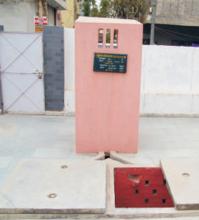
Model No. 11
Substructure : Cement concrete 1:4:8 in foundation, brick work in 1:6 cement mortar, C.C. 1:2:4 flooring over 75 mm C.C. 1:6:12, fibre glass pan, HDPE trap and ceramic foot rests. Pit lining – Brick work 115 mm in 1:6 cement mortar (Rectangular pit divided by a partition wall in two chambers), partition wall plastered on both sides in cement mortar 1:6, Pit cover – 50 mm thick R.C.C. 1:2:4.
Superstructure: 115 mm thick brick work in 1:6 cement mortar, outside plastered, 600 mm high dado in cement mortar 1:4 holes in brick work for ventilation, R.C.C. roof 50 mm thick and country wood door 1500 mm high. Inside white wash and outside colour wash.
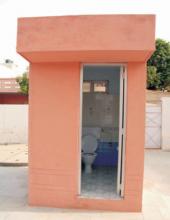
Model No. 12
Substructure : Cement concrete 1:4:8 in foundation, brick work in 1:6 cement mortar, Ceramic tiles flooring over 25 mm thick C.C. 1:2:4 base on 75 mm C.C. 1:4:8, Ceramic European Pan, Porcelain Trap. Pit lining – Brick work 223 mm in cement mortar 1:6, Pit cover – 115 mm thick R.C.C. 1:2:4 wash basin with mirror.
Superstructure: 225 mm thick brick work in 1:6 cement mortar, plaster on both sides, 900 mm high while glazed tiles dado, wooden ventilator, 75 mm thick R.C.C. roof and Aluminum panelled door with Aluminum frame 2100 mm high. Inside ceramic tiles and outside colour wash.
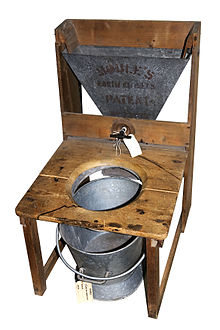
Dry earth toilet:
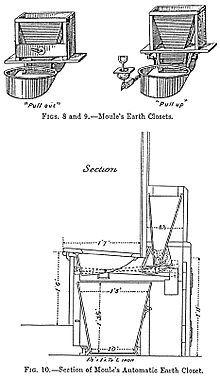
Before the flush toilet became accepted in the late 19th century in developed countries, some inventors, scientists and public health officials supported the use of “dry earth closets”, a type of dry toilet with similarities to composting toilets, but the collection vessel for the human excreta was not designed to compost. Dry earth closets were invented by English clergyman Henry Moule, who dedicated his life to improving public sanitation after witnessing the cholera epidemics of 1849 and 1854. Impressed by the insalubrity of the houses, especially during the Great Stink in the summer of 1858, he invented what he called the ‘dry earth system’.
In partnership with James Bannehr, he patented his device (No. 1316, dated 28 May 1860). Among his works bearing on the subject were The Advantages of the Dry Earth System (1868), The Impossibility overcome: or the Inoffensive, Safe, and Economical Disposal of the Refuse of Towns and Villages (1870), The Dry Earth System (1871), Town Refuse, the Remedy for Local Taxation (1872), and National Health and Wealth promoted by the general adoption of the Dry Earth System (1873).
His system was adopted in private houses, in rural districts, in military camps, in many hospitals, and extensively in the British Raj. Ultimately, however, it failed to gain public support as attention turned to the water-flushed toilet connected to a sewer system.
In Germany, a similar dry toilet with a peat dispenser was marketed until after the second World War (it was called “Metroclo” and was manufactured by Gefinal, Berlin).
International Organization for Standardization (ISO)
The International Organization for Standardization (ISO) is currently preparing a “management standard”. As of 2015 this was in a draft state as ISO 24521, under the heading “Activities relating to drinking water and wastewater services — Guidelines for the management of basic onsite domestic wastewater services”. The standard is meant to be used in conjunction with ISO 24511. It deals with toilets (including composting toilets) and toilet waste. The guidelines are applicable to basic wastewater systems and include the complete domestic wastewater cycle, such as planning, usability, operation and maintenance, disposal, reuse and health.
International Association of Plumbing and Mechanical Officials
The International Association of Plumbing and Mechanical Officials (IAPMO) is a plumbing and mechanical code structure adopted by many developed countries. It recently proposed an addition to its “Green Plumbing Mechanical Code Supplement” that, “…outlines performance criteria for site built composting toilets with and without urine diversion and manufactured composting toilets.”[ If adopted, this composting and urine diversion toilet code (the first of its kind in the United States) will appear in the 2015 edition of the Green Supplement to the Uniform Plumbing Code.
CompostingToilet:
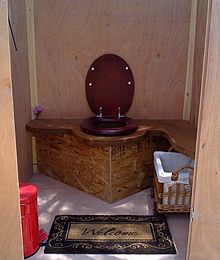
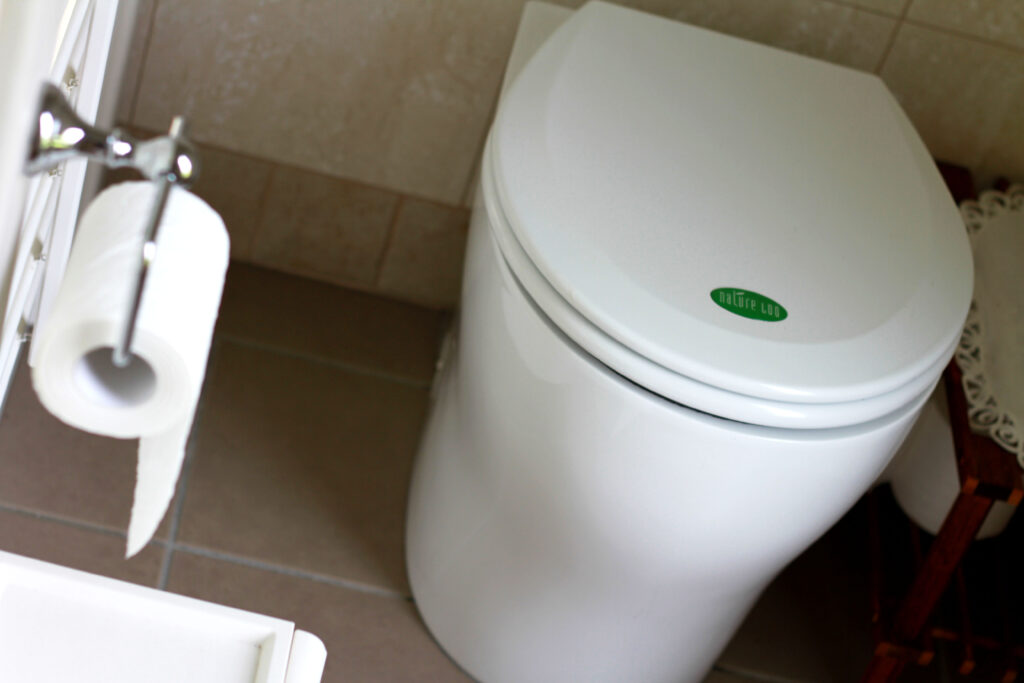
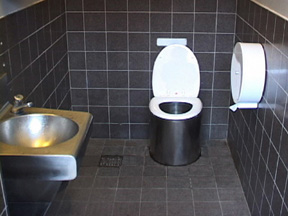
A composting toilet is a type of dry toilet that uses a predominantly aerobic processing system to treat human excreta, by composting or managed aerobic decomposition. These toilets generally use little to no water and may be used as an alternative to flush toilets.[1] They have found use in situations where no suitable water supply or sewer system and sewage treatment plant is available to capture the nutrients in human excreta. They are in use in many roadside facilities and national parks in Sweden, Canada, US, UK and Australia. They are used in rural holiday homes in Sweden and Finland.
The human excreta is usually mixed with sawdust, coconut coir or peat moss to facilitate aerobic processing, liquid absorption, and odor mitigation. Most composting toilets use slow, cold composting conditions, sometimes connected to a secondary external composting step.
Composting toilets produce a compost that may be used for horticultural or agricultural soil enrichment if the local regulations allow this. A curing stage is often needed to allow mesophilic composting to reduce potential phytotoxins.
Terminology:
The term “composting toilet” is used quite loosely, and its meaning may vary by country. For example, in English-speaking countries, the term “anaerobic composting” (equivalent to anaerobic decomposition) is used. In Germany and Scandinavian countries, composting always refers to a predominantly aerobic process. This aerobic composting may take place with an increase in temperature due to microbial action, or without a temperature increase in the case of slow composting or cold composting. If earth worms are used (vermicomposting) then there is also no increase in temperature.
Composting toilets differ from pit latrines, arborloo or tree bogs, all of which are forms of less controlled decomposition and may not protect ground-water from nutrient or pathogen contamination or provide optimal nutrient recycling. They also differ from urine-diverting dry toilets (UDDTs) where pathogen reduction is achieved through dehydration (also known by the more precise term “desiccation”) and where the faeces collection vault is kept as dry as possible. Composting toilets target a certain degree of moisture in the composting chamber.
Composting toilets usually do not divert urine. Offering a waterless urinal in addition to the toilet can help keep excess amounts of urine out of the composting chamber.
Composting toilets can be used to implement an ecological sanitation approach for resource recovery, and some people call their composting toilet designs “ecosan toilets” for that reason. However, this is not recommended as the two terms (i.e. composting and ecosan) are not identical.[2][3]
Composting toilets have also been called “sawdust toilets”, which can be appropriate if the amount of aerobic composting taking place in the toilet’s container is very limited.[4] The “Clivus multrum” is a type of composting toilet which has a large composting chamber below the toilet seat and also receives undigested organic material to increase the carbon to nitrogen ratio.
Applications:
Composting toilets can be suitable in areas such as a rural area or a park that lacks a suitable water supply, sewers and sewage treatment. They can also help increase the resilience of existing sanitation systems in the face of possible natural disasters such as climate change, earthquakes or tsunami. Composting toilets can reduce or perhaps eliminate the need for a septic tank system to reduce environmental footprint (particularly when used in conjunction with an on-site greywater treatment system).
These types of toilets can be used for resource recovery by reusing sanitized feces and urine as fertilizer and soil conditioner for gardening or ornamental activities.
Components:
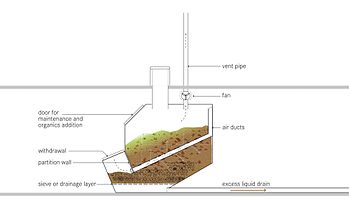
A composting toilet consists of two elements: a place to sit or squat and a collection/composting unit.[2] The composting unit consists of four main parts.
- storage or composting chamber
- a ventilation unit to ensure that the degradation process in the toilet is predominantly aerobic and to vent odorous gases
- a leachate collection system to remove excess liquid
- an access door for extracting the compost
- a leachate collection system to remove excess liquid
- a ventilation unit to ensure that the degradation process in the toilet is predominantly aerobic and to vent odorous gases
Odorous Gases:
The following gases may be emitted during the composting process that takes place in composting toilets: hydrogen sulfide (H2S), ammonia, nitrous oxide (N2O) and volatile organic compounds (VOCs).[6] These gases can potentially lead to complaints about odours. Some methane may also be present, but it is not odorous.
Pathogen removal:
Excreta-derived compost recycles fecal nutrients, but it can carry and spread pathogens if the process of reuse of excreta is not done properly.
Internal pathogen destruction rates are usually low, particularly helminth eggs, such as Ascaris eggs.[4] This carries the risk of spreading disease if a proper system management is not in place. Compost from human excreta processed under only mesophilic conditions or taken directly from the compost chamber is not safe for food production.[7] High temperatures or long composting times are required to kill helminth eggs, the hardiest of all pathogens. Helminth infections are common in many developing countries.
In thermophilic composting bacteria that thrive at temperatures of 40–60 °C (104–140 °F) oxidize (break down) waste into its components, some of which are consumed in the process, reducing volume and eliminating potential pathogens. To destroy pathogens, thermophilic composting must heat the compost pile sufficiently, or enough time (1–2 years) must elapse since fresh material was added that biological activity has had the same pathogen removal effect.
One guideline claims that pathogen levels are reduced to a safe level by thermophilic composting at temperatures of 55 °C for at least two weeks or at 60 °C for one week.[2] An alternative guideline claims that complete pathogen destruction may be achieved already if the entire compost heap reaches a temperature of 62 °C (144 °F) for one hour, 50 °C (122 °F) for one day, 46 °C (115 °F) for one week or 43 °C (109 °F) for one month,[5] although others regard this as overly optimistic
Environmental factors:
Four main factors affect the decomposition process:
Sufficient oxygen is necessary for aerobic composting
Moisture content from 45 to 70 percent (heuristically, “the compost should feel damp to the touch, with only a drop or two of water expelled when tightly squeezed in the hand.”
Temperature between 40 and 50 °C (achieved through proper chamber dimensioning and possibly active mixing)
Carbon-to-nitrogen ratio (C:N) of 25:1
Additives and bulking material
Human excreta and food waste do not provide optimum conditions for composting. Usually the water and nitrogen content is too high, particularly when urine is mixed with feces. Additives or “bulking material”, such as wood chips, bark chips, sawdust, ash and pieces of paper can absorb moisture. The additives improve pile aeration and increase the carbon to nitrogen ratio Bulking material also covers faeces and reduces insect access. Absent sufficient bulking material, the material may become too compact and form impermeable layers, which leads to anaerobic conditions and odour
Leachate management
Leachate removal controls moisture levels, which is necessary to ensure rapid, aerobic composting. Some commercial units include a urine-separator or urine-diverting system and/or a drain at the bottom of the composter for this purpose.
Aeration and mixing
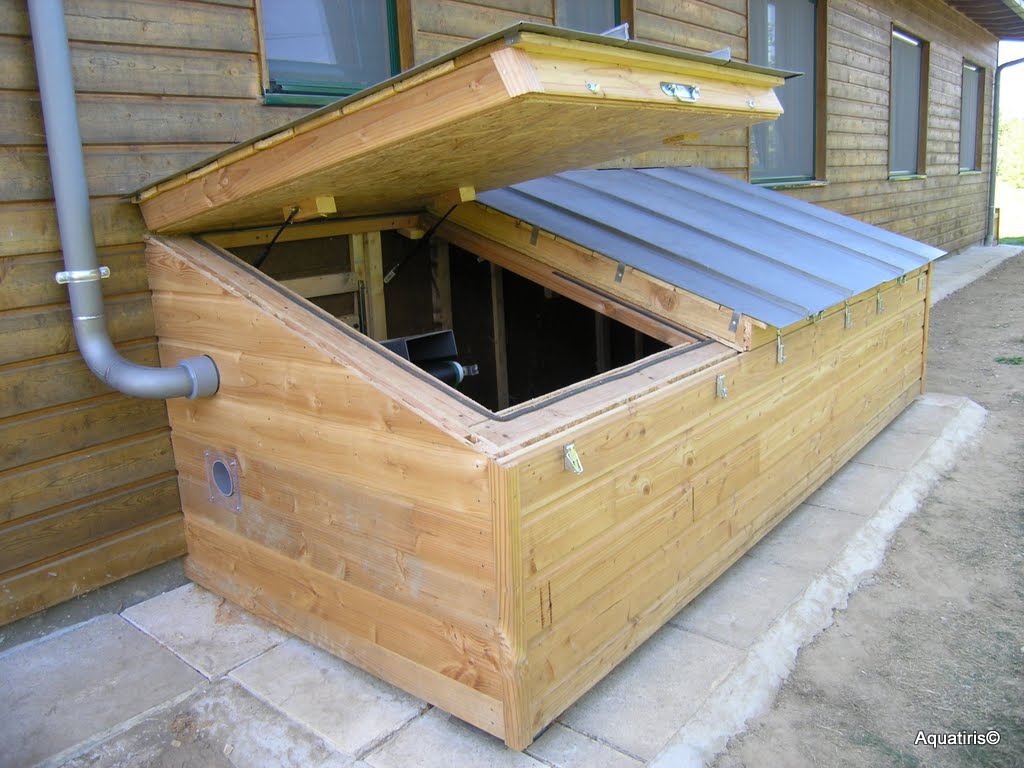
Microbial action also requires oxygen, typically from the air. Commercial systems provide ventilation that moves air from the bathroom, through the waste container, and out a vertical pipe, venting above the roof. This air movement (via convection or fan forced) passes carbon dioxide and odors.
Some units require manual methods for periodic aeration of the solid mass such as rotating the composting chamber or pulling an “aerator rake” through the mass.
Slow composting (or moldering) toilets:
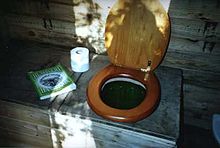
Most composting toilets use slow composting which is also called “cold composting”. The compost heap is built up step by step over time.
The finished end product from “slow” composting toilets (“moldering toilets” or “moldering privies” in the US), is generally not free of pathogens. World Health Organization Guidelines from 2006 offer a framework for safe reuse of excreta, using a multiple barrier approach.
Slow composting toilets employ a passive approach. Common applications involve modest and often seasonal use, such as remote trail networks. They are typically designed such that the materials deposited can be isolated from the operational part. The toilet can also be closed to allow further mesophilic composting. Slow composting toilets rely on long retention times for pathogen reduction and for decomposition of excreta or on the combination of time and/or the addition of red wriggler worms for vermi-composting. Worms can be introduced to accelerate composting. Some jurisdictions of the US consider these worms as invasive species
Example in Vermont woods
Slow composting toilets have been installed by the Green Mountain Club in Vermont’s woodlands. They employ multiple vaults (called cribs) and a movable building. When one of the vaults fills, the building is moved over an empty vault. The full vault is left untouched for as long as possible (up to three years) before it is emptied. The large surface area and exposure to air currents can cause the pile to dry out. To counteract this, signs instruct users to urinate in the toilet. The club also uses pit latrines and simple bucket toilets with woodchips and external composting and directs users to urinate in the forest to prevent odiferous anaerobic conditions
Active composters
Self-contained
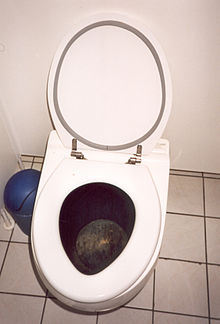
“Self-contained” composting toilets compost in a container within the toilet unit. They are slightly larger than a flush toilet, but use roughly the same floor space. Some units use fans for aeration, and optionally, heating elements to maintain optimum temperatures to hasten the composting process and to evaporate urine and other moisture. Operators of composting toilets commonly add a small amount of absorbent carbon material (such as untreated sawdust, coconut coir, peat moss) after each use to create air pockets to encourage aerobic processing, to absorb liquid and to create an odor barrier. This additive is sometimes referred to as “bulking agent.” Some owner-operators use microbial “starter” cultures to ensure composting bacteria are in the process, although this is not critical.
Remote
“Remote” “central” or “underfloor” units collect excreta via a toilet stool, either waterless, vacuum or micro-flush, from which it drains into a composter. “Vacuum-flush systems” can flush horizontally or upward with a small amount of water to the composter. “Micro-flush” toilets use about 500 millilitres (17 US fl oz) per use. These units feature a chamber below the toilet stool (such as in a basement or outside) where composting takes place and are suitable for high-volume and year-round applications as well as to serve multiple toilet stools.
Other
Some units employ roll-away containers fitted with aerators, while others use sloped-bottom tanks.
Maintenance:
Maintenance is critical to ensure proper operation, including odor prevention. Maintenance tasks include: cleaning, servicing technical components such as fans and removal of compost, leachate and urine. Urine removal is only required for those types of composting toilets using urine diversion.
Once composting is complete (or more often), the compost must be removed from the unit. How often this occurs is a function of container size, usage and composting conditions, such as temperature.[2] Active, hot composting may span months only while passive, cold composting may require years. Properly managed units yield output volumes of about 10% of inputs.
Uses of compos
Main articles: Uses of compost and Reuse of excreta
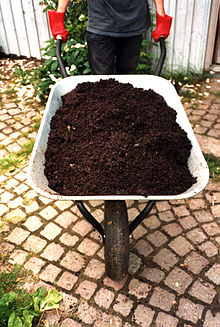
The material from composting toilets is a humus-like material, which can be suitable as a soil amendment for agriculture. Compost from residential composting toilets can be used in domestic gardens, and this is the main such use.
Enriching soil with compost adds substantial nitrogen, phosphorus, potassium, carbon and calcium. In this regard compost is equivalent to many fertilizers and manures purchased in garden stores. Compost from composting toilets has a higher nutrient availability than the dried faeces that result from a urine-diverting dry toilet.
Urine is typically present, although some is lost via leaching and evaporation. Urine can contain up to 90 percent of the residual nitrogen, up to 50 percent of the phosphorus, and up to 70 percent of the potassium.
Compost derived from these toilets has in principle the same uses as compost derived from other organic waste products, such as sewage sludge or municipal organic waste. However, users of excreta-derived compost must consider the risk of pathogens.
Pharmaceutical residues
Excreta-derived compost may contain prescription pharmaceuticals. Such residues are also present in conventional wastewater treatment effluent. This could contaminate groundwater. Among the medications that have been found in groundwater in recent years are antibiotics, antidepressants, blood thinners, ACE inhibitors, calcium-channel blockers, digoxin, estrogen, progesterone, testosterone, Ibuprofen, caffeine, carbamazepine, fibrates and cholesterol-reducing medications.[15] Between 30% and 95% of pharmaceuticals medications are excreted by the human body. Medications that are lipophilic (dissolved in fats) are more likely to reach groundwater by leaching from fecal wastes. Wastewater treatment plants remove an average of 60% of these medications. The percentage of medications degraded during composting of excreta has not yet been reported.
Pit latrines
Unlike pit latrines, composting toilets convert feces into a dry, odorless material, avoiding the issues surrounding liquid fecal sludge management (e.g. odor, insects and disposal). These toilets minimize the risk of water pollution through the safe containment of feces in above-ground vaults, which allows the toilets to be sited in locations where pit-based systems are not appropriate.
However, composting toilets face higher capital costs (although lifecycle costs might be lower) and greater complexity (for instance, adding covering materials and managing moisture content).
Flush toilets.
Unlike flush toilets, composting toilets do not dilute excreta and create wastewater streams which must be treated before disposal. On the other hand, wastewater treatment plants can centralize waste management for an entire community, with potentially greater efficiency.
Urine-diverting dry toilets
Composting toilets are more difficult to maintain than other types of dry toilets, like urine-diverting dry toilets (UDDT) with which they are often confused. This is due to the need to maintain a consistent and relatively high moisture content, as well as the relatively high complexity of composting toilets compared to UDDTs. Apart from that, composting toilets are quite similar to UDDTs, sharing many of the same advantages and disadvantages.